Museum wall labels are about ninety words long. Artist, title, date, medium, a sentence of context. They are not lying to you, exactly. They’re just leaving out the part where the painter was broke, or grieving, or on his thirtieth name change, or painting from a hospital bed, or being paid an absurd sum by a widow who wanted portraits of her forty-two cats.
That last one is real, and it’s week 7.
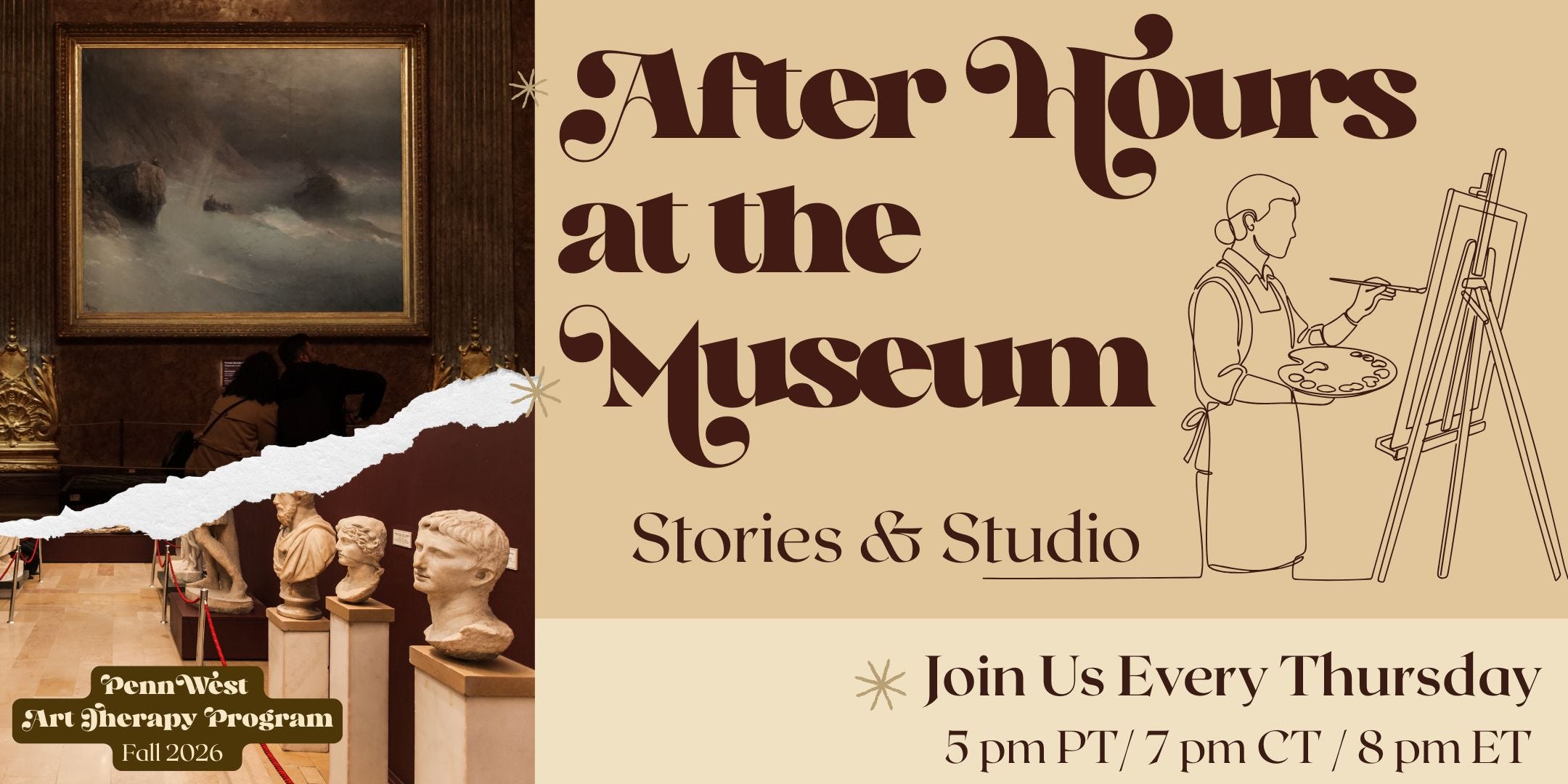
After Hours at the Museum: Stories & Studio is a sixteen-week virtual open studio built on a simple premise of spending real time with the story behind one work of art, then making something of your own while it’s still in your head. Not a copy of it but something that belongs to you, made in response.
Over the fall season we’ll sit with Rothko’s color fields, Hokusai’s great wave, Van Gogh’s night sky, Magritte’s man with an apple for a face, the two most parodied faces in American painting, Kusama’s dots, Klimt’s gold, Frida Kahlo, and Matisse making some of the boldest work of his life with scissors, from a chair, because he could no longer stand at an easel.
The stories are better than you’d think. Hokusai went bankrupt, lost his studio to fire, changed his name more than thirty times, and made the wave in his seventies, then wrote that if he could live to a hundred and ten, every dot he made would be alive. Rothko spent over twenty years teaching art to children in Brooklyn because he believed they made marks without stopping to ask whether the marks were any good, and that adults get trained out of it. Matisse called the cut-outs a second life.
There’s a thread running through all of them, and it isn’t talent. It’s people who kept making things under conditions that would have been a perfectly good excuse to stop.
Why we build it this way
The hardest moment in any open studio is the blank page, the feeling of produce something, from nothing, in front of people, with no idea what’s expected. Beginning from an existing artwork changes that problem entirely. The work on the screen becomes the thing everyone is responding to, and it gives the group somewhere to look that isn’t each other’s hands. It’s a long-standing move in museum-based practice, and it holds. If you are a long time reader of museotherapy than you’re familiar with the science behind it.
Each session runs the same way: a interesting story, a low-stakes warm-up you make while you listen, an invitation to make art, and time at the end to talk about what came out of it, but only if you want to. Nobody is ever required to show their work or say anything about it.
The practical details
Thursdays, 7-8:30 CT, on Zoom
Beginning August 20th — come to one, come to all of them
Open to any adult, 18+
Free
No art experience needed. No technique instruction and no critique, ever.
No required materials
Sharing is invited, never required.
Facilitated by me, Brooke Christensen, through PennWest University’s Art Therapy program.
If you’ve been meaning to make something again and haven’t found the excuse, here are sixteen of them. Bring whatever’s in the drawer.